If you asked ten marketers in 2023 what "search" meant, all ten would have said the same thing: Google. Two years later, the answer is unrecognizable.
If you're new to the concept, the GEO complete guide explains what it is and how it differs from traditional SEO. In this article, we explore the bigger picture: how AI search is reshaping the entire landscape.
The Fragmentation of Search
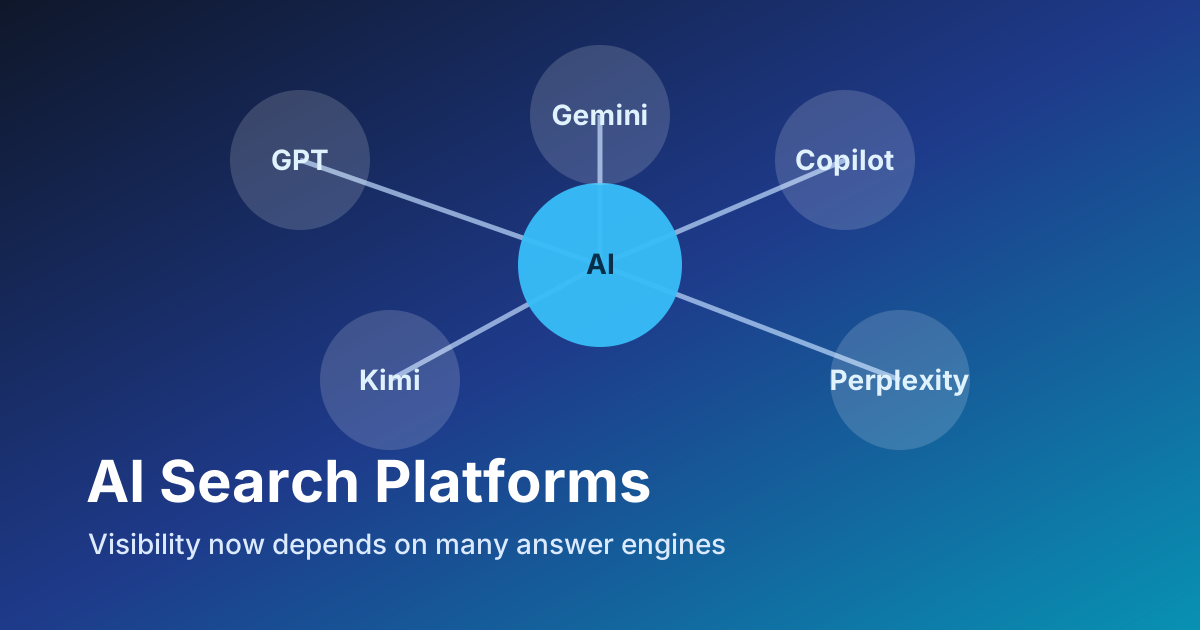
The most important trend is fragmentation. In 2023, Google handled over 90% of global search traffic. In 2026, no single platform dominates. Users spread their queries across:
Each platform has different strengths, user bases, and optimization requirements. A brand visible on ChatGPT might be invisible on Kimi.
How AI Search Changes User Behavior
When users interact with AI search, their behavior changes in three critical ways:
1. Zero-click consumption is the norm. Users ask a question, get a complete answer, and move on. They don't click through to websites. This means traditional "traffic" metrics don't capture your AI search value.
2. Comparison shifts sideways. Instead of searching "best GEO agency" and comparing ten result pages, users ask "which GEO agencies are most recommended?" The AI curates and summarizes. References are binary — you're either in the answer or you're not.
3. Trust transfers to platforms. Users increasingly trust AI summaries over individual brand claims. If ChatGPT recommends your competitor but not you, you're losing trust before the user even visits your site.
What This Means for Marketers
The implications are profound:
The China Factor: Why Kimi Matters More Than You Think
International marketers often overlook Kimi, but that's a mistake. Kimi, developed by Moonshot AI, has become China's most popular AI search platform with over 30 million active users. It's particularly strong at:
For any company targeting the Chinese market — or Chinese-language audiences globally — Kimi optimization deserves a dedicated strategy.
Looking Ahead
The shift to AI search is accelerating. Gartner predicts that by 2027, traditional search engine traffic will decline by 40% as users shift to AI platforms. Brands investing in GEO today are building an advantage that will compound over the next 18-24 months.
The key takeaway: don't think of GEO as an SEO add-on. Think of it as a new marketing channel with its own rules, metrics, and optimization requirements. The brands that treat it seriously will define the next era of digital discovery.
Want to know how your brand is performing across these platforms? Contact our team for a multi-platform GEO audit covering ChatGPT, Gemini, Kimi, Copilot, and Perplexity.
*Need help navigating multi-platform AI search? Synta Technology offers comprehensive GEO strategy services across ChatGPT, Gemini, Kimi, and Copilot. Contact us for a consultation.*